Skip to content

Call Us Toll Free (800) 688-5956

Nutracap
Custom Formulated Supplements
Nutracap
  • Home
  • Manufacturing
    • Supplements Manufacturing
    • Cosmetics Manufacturing
  • Our Services
    • Supplements Manufacturing
    • Cosmetics Manufacturing
    • Private Label
    • Label Design Services
    • Custom Samples
    • Wholesale
  • Ingredients
    • Ingredients
    • Packaging
  • About Us
    • Facility Virtual Tour
    • WHY CHOOSE US
    • Careers
  • Get A Free Quote!
  • Home
  • Manufacturing
    • Supplements Manufacturing
    • Cosmetics Manufacturing
  • Our Services
    • Supplements Manufacturing
    • Cosmetics Manufacturing
    • Private Label
    • Label Design Services
    • Custom Samples
    • Wholesale
  • Ingredients
    • Ingredients
    • Packaging
  • About Us
    • Facility Virtual Tour
    • WHY CHOOSE US
    • Careers
  • Get A Free Quote!

Agmatine Sulfate

| Nutracap

Origin: Derived from L-Arginine through decarboxylation.

Also Known As:

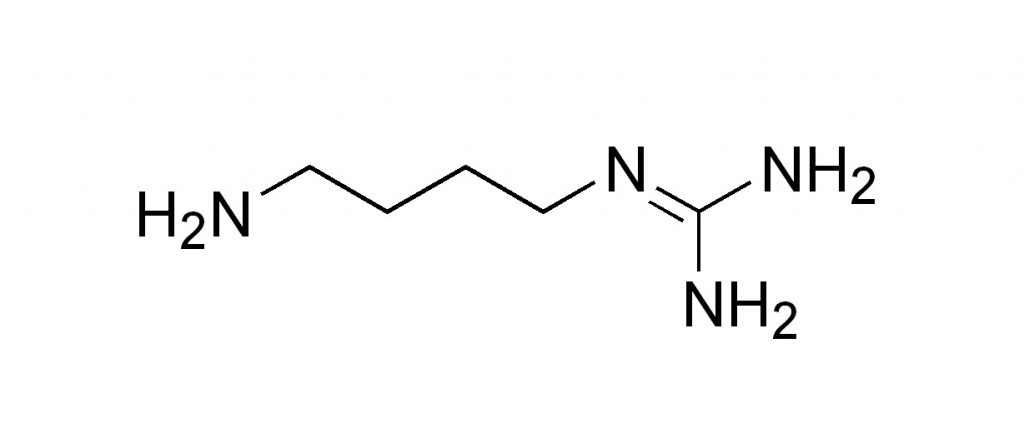
(4-aminobutyl)guanidine

Overview: Agmatine Sulfate is stored within neurons and is released during neuronal activation. It regulates the levels of Nitric Oxide when elevated within the body. Agmatine Sulfate also appears to do much of the same things as Arginine but at a greater rate of potency. It has a decidedly Nootropic effect and can help people achieve a mental edge, whether in or out of the gym or athletic training.

Common Dosage: The common dosage for agmatine ranges between 100 mg and 1000 mg depending on the intended use.

Overview Description

Agmatine, also known as (4-aminobutyl) guanidine, is a chemical found in bacteria, plants, and animals. Discovered in 1910 by Albrecht Kossel, is a chemical substance which is naturally created from the amino acid arginine.

It has shown to display modulatory action at several molecular targets, and specifically the neurotransmitter systems, ion channels, nitric oxide (NO) synthesis as well as polyamine metabolism. It has the potential to improve memory, also alleviate neuropathic pain and drug addiction and also shows potential to possibly protect against strokes.

Benefits and Uses

Agmatine is commonly used for depression, nerve pain, improving athletic performance, and many more conditions.

Beneficial in Increased Nitric oxide production, agmatine can help deliver more red blood cells, hence more oxygen to our muscular systems which can help increase energy during workouts.

May Provide Short Term Pain Relief, especially in the nervous system, as it has shown potential to help rebuild the nervous system, with its trophic factors and induce endogenous repair mechanisms.

Can help alleviate depression as studies have reflected properties in agmatine is involved with activation of GABA receptors, as well as neuroprotective properties involved with glutamine excitatory as an inhibitory modulator.

Forms and sources

Agmatine is made is found naturally in ragweed pollen, ergot fungi, octopus muscle, herring sperm, sponges, and the mammalian brain

Agmatine sulfate

There are many other forms of agmatine, most are not safe for consumption.

Side Effects and Interactions

Studies have already shown that oral agmatine sulfate given for up to … for at least 5 years without evidence of any adverse effects

How to Label

Agmaine as (agmatine sulfate)

Research & Studies (References)

Safety and Efficacy of Dietary Agmatine Sulfate in Lumbar Disc-associated Radiculopathy. An Open-label, Dose-escalating Study Followed by a Randomized, Double-blind, Placebo-controlled Trial

Dietary agmatine sulfate is safe and efficacious treatment for alleviating pain and improving quality of life in lumbar disc-associated radiculopathy

https://pubmed.ncbi.nlm.nih.gov/20447305/

The clinical antidepressant effect of exogenous agmatine is not reversed by parachlorophenylalanine: a pilot study

The antidepressant effect of exogenous agmatine was documented in a small number of MDD subjects, and was not reversed/modified by PCPA confirming findings in animals that therapeutic response is not mediated by serotonergic mechanisms. A NAMDA (N‐methyl‐D‐aspartate) receptor antagonist, agmatine’s recognized function in brain as inhibitory modulator of excitatory glutamatergic transmission suggests a pivotal role for brain glutamate, contributing to the ripening glutamatergic basis of depression, and a rational basis for future antidepressant pharmacotherapy.

https://www.cambridge.org/core/journals/acta-neuropsychiatrica/article/abs/clinical-antidepressant-effect-of-exogenous-agmatine-is-not-reversed-by-parachlorophenylalanine-a-pilot-study/62BA83527CFA2D1F283A4899307103DE

Neuroprotective Role of Agmatine in Neurological Diseases

The safety and low incidence of adverse effects indicate the vast potential therapeutic value of agmatine in the treatment of neurological diseases.

https://pubmed.ncbi.nlm.nih.gov/28786346/

Neuroprotective offerings by agmatine

The cumulative evidences of preclinical studies support the possible use of agmatine as an agent for neuronal damage and neurodegenerative diseases.

https://pubmed.ncbi.nlm.nih.gov/31063707/

Agmatine as a potential therapeutic intervention in bipolar depression: the preclinical landscape

efficacy of agmatine in several models of depressive-like behaviour, and suggests that it may prove to be an efficacious adjunctive treatment in bipolar depression. Furthermore, it discusses a proposed pathway linking systemic inflammation, observed in a subset of bipolar disorder patients, to abnormal polyamine metabolism and associated changes in the epithelial gut barrier and blood-brain barrier.

https://pubmed.ncbi.nlm.nih.gov/30764678/

Agmatine Protects Against the Progression of Sepsis Through the Imidazoline I2 Receptor-Ribosomal S6 Kinase 2-Nuclear Factor-κB Signaling Pathway

Endogenous agmatine metabolism correlated with the progression of sepsis. Supplemental exogenous agmatine could ameliorate the lipopolysaccharide-induced systemic inflammatory responses and multiple organ injuries through the imidazoline I2 receptor-ribosomal S6 kinase 2-nuclear factor-κB pathway. Agmatine could be used as both a clinical biomarker and a promising pharmaconutrient in patients with severe sepsis.

https://pubmed.ncbi.nlm.nih.gov/31634234/

Agmatine, a potential novel therapeutic strategy for depression

The potential beneficial effects of agmatine for the treatment of other neurological disorders are presented. In particular, we provide evidence to encourage future clinical studies investigating agmatine as a novel antidepressant drug.

https://pubmed.ncbi.nlm.nih.gov/27836390/

Agmatine : metabolic pathway and spectrum of activity in brain

In an animal model of acute stress disorder, intraperitoneal agmatine injections diminish contextual fear learning. Furthermore, intraperitoneal injections of agmatine reduce alcohol and opioid dependence by diminishing behaviour in a rat conditioned place preference paradigm. Based on these findings, agmatine appears to be an endogenous neuromodulator of mental stress. The possible roles and/or beneficial effects of agmatine in stress-related disorders, such as depression, anxiety and post-traumatic stress disorder, merit further investigation.

https://pubmed.ncbi.nlm.nih.gov/17927294/

Therapeutic potential of agmatine for CNS disorders

Agmatine also stimulates the expression of trophic factors and adult neurogenesis, contributing to its ability to induce endogenous repair mechanisms. Therefore, considering its wide range of biological effects, this review summarizes the current knowledge about its protective and regenerative properties in the CNS.

https://pubmed.ncbi.nlm.nih.gov/28522414/

Agmatine: at the crossroads of the arginine pathways

We propose that the catabolism of agmatine to its aldehyde metabolite may act as a gating mechanism at the transition from the iNOS/NO axis to the arginase/ODC/polyamine axis. Thus, agmatine has the potential to serve in the coordination of the early and repair phase pathways of arginine in inflammation.

https://pubmed.ncbi.nlm.nih.gov/15028568/

The involvement of GABAergic system in the antidepressant-like effect of agmatine

Results suggest that the effect of agmatine in the TST may involve an activation of GABAA receptors dependent on NMDA receptor inhibition, similar to ketamine, as well as modulation of GABAB receptors.

https://pubmed.ncbi.nlm.nih.gov/32447465/

Agmatine ameliorates manifestation of depression-like behavior and hippocampal neuroinflammation in mouse model of Alzheimer’s disease

the present study suggests the importance of endogenous agmatinergic system and imidazoline receptors system in β-amyloid induced a depressive-like behavior in mice. The data projects agmatine as a potential therapeutic target for the AD-associated depression and comorbidities.

https://pubmed.ncbi.nlm.nih.gov/32344125/

ncl-made-in-usa
ncl-fda
ncl-gmp-certified
| Nutracap
| Nutracap
| Nutracap

For more information call (800) 688-5956 or Contact Us for a Free Quote!

También hablamos Español

Share this post
Share on WhatsAppShare on WhatsApp Share on LinkedInShare on LinkedIn Pin itShare on Pinterest Share on XShare on X Share on FacebookShare on Facebook

Agmatine Sulfate

agmatine-true-nutrition-1024x448

Agmatine Sulfate is a biogenic amine that is derived from the amino acid L-Arginine. This happens by a process called decarboxylation, which is better known as the removal of carboxylic acid group from the amino acid. This results in the compound Agmatine Sulfate which appears to be stored within the neurons of the brain and is released as these neurons become activated. This is a very interesting process and mechanism of storage which has actions and activities that are very different from its predecessor.

This is a promising ingredient in terms of neuropathic pain, stroke protection as well as general cognitive health and a novel neurotransmitter.

The method of action primarily taken by Agmatine Sulfate is by crossing the blood-brain barrier and entering the central nervous system and then binding to the glutamine receptors. Since this is the chief neurotransmitter involved in plasticity and memory function this is what is responsible for a number of the associated cognitive benefits of this ingredient.

Agmatine Sulfate also appears to regulate levels of nitric oxide and also has some analgesic activities, releasing a number of opioid and endorphin chemicals, seeming to have a synergistic effect on many of these chemicals. It is also capable of enhancing the effects of both morphine and fentanyl to increase killing pain, reducing tolerance, and lower addiction habits.

There are a number of benefits associated with Agmatine Sulfate. It seems to do many of the same things Arginine but a greater rate of potency. It has a decidedly nootropic effect and can help people achieve a mental edge, whether in or out of the gym or athletic training.

Agmatine Sulfate supports a healthy mood, has anti-anxiety properties and may also stack well with other supplements such as Aniracetam and other Ampakines. It also acts as an anti-oxidant. Part of these benefits is due to the fact that it helps limit the activity of glutamate and thus, over excitation of the brain. Agmatine Sulfate also prevent s excitotoxicity which can occur when using things like modafinil or other similar nootropic supplements.

There are also a number of athletic effects. This includes enhancing and improving insulin response of the body. This has long been thought to be one of the biggest keys to builder a leaner, harder, and more muscular body.

Agmatine Sulfate has also been said to increase the stimulation of GH and LH hormones which can have a positive effects upon the overall body composition. Due to the regulation of nitric oxide levels in the body, Agmatine Sulfate may also lead to better muscle pumps in weight training athletes.

There are a large number of benefits associated with Agmatine Sulfate. Visit our website www.nutracapusa.com to find out how you can turn Agmatine Sulfate into your next profitable product.


Share this post
Share on WhatsAppShare on WhatsApp Share on LinkedInShare on LinkedIn Pin itShare on Pinterest Share on XShare on X Share on FacebookShare on Facebook

Related Posts

The Power of Probiotics, Prebiotics, and Postbiotics for a Healthy Gut
November 1, 2023
Unlocking Your Mind’s Potential: Exploring Nootropics and Their Surging Popularity
November 1, 2023
Colostrum supplement white
Unveiling the Power of Colostrum – The super food!
September 27, 2023
black Bottle of Shilajit from the brand GenOne
The Ancient Power of Shilajit: Benefits and Composition
September 11, 2023
Protein Powder: Where Does It Go From Here?
July 23, 2020
The benefit of using custom supplement formulas and product samples…
February 19, 2020

Leave a Reply

You must be logged in to post a comment.

Go to Top